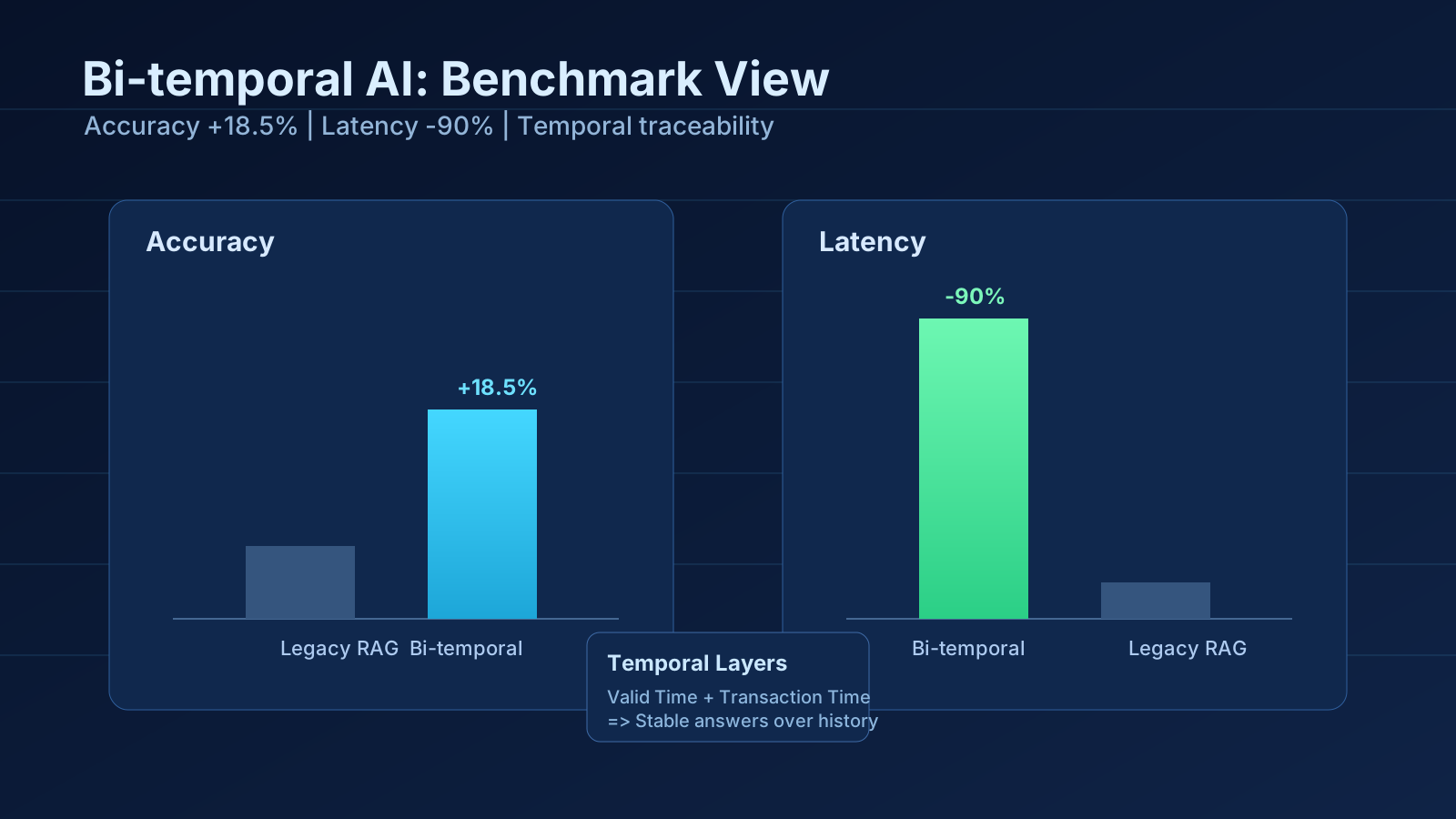
In the era of Artificial Intelligence, the most persistent pain points of Large Language Models (LLMs) are “hallucinations” and a severe lack of long-term memory capabilities over time. To permanently resolve these issues, the data science community is pivoting toward a powerful architectural standard: The Bi-Temporal Data Model.
Empirical results have proven the astonishing power of this model. Long-term memory benchmarks demonstrate that it boosts AI accuracy by 18.5%. Furthermore, architectures integrating bi-temporal structures help reduce query latency by up to 90% and completely eliminate information hallucinations by providing the ability to trace the origin of any fact down to the exact second.
1. Definition and Foundational Scientific Research
Definition: The “Two Clocks” Logic
The bi-temporal data model operates on the principle of managing information in parallel across two distinct time axes:
- Valid Time: When a fact or event actually occurred or became true in the real world.
- Transaction Time: When the database system actually recorded this information.
The golden rule of this model is never delete or overwrite. When a fact changes, the system simply “closes” the old version with an end-timestamp and creates a new version. This allows the AI to “time-travel” and see exactly what it knew at any specific point in the past.
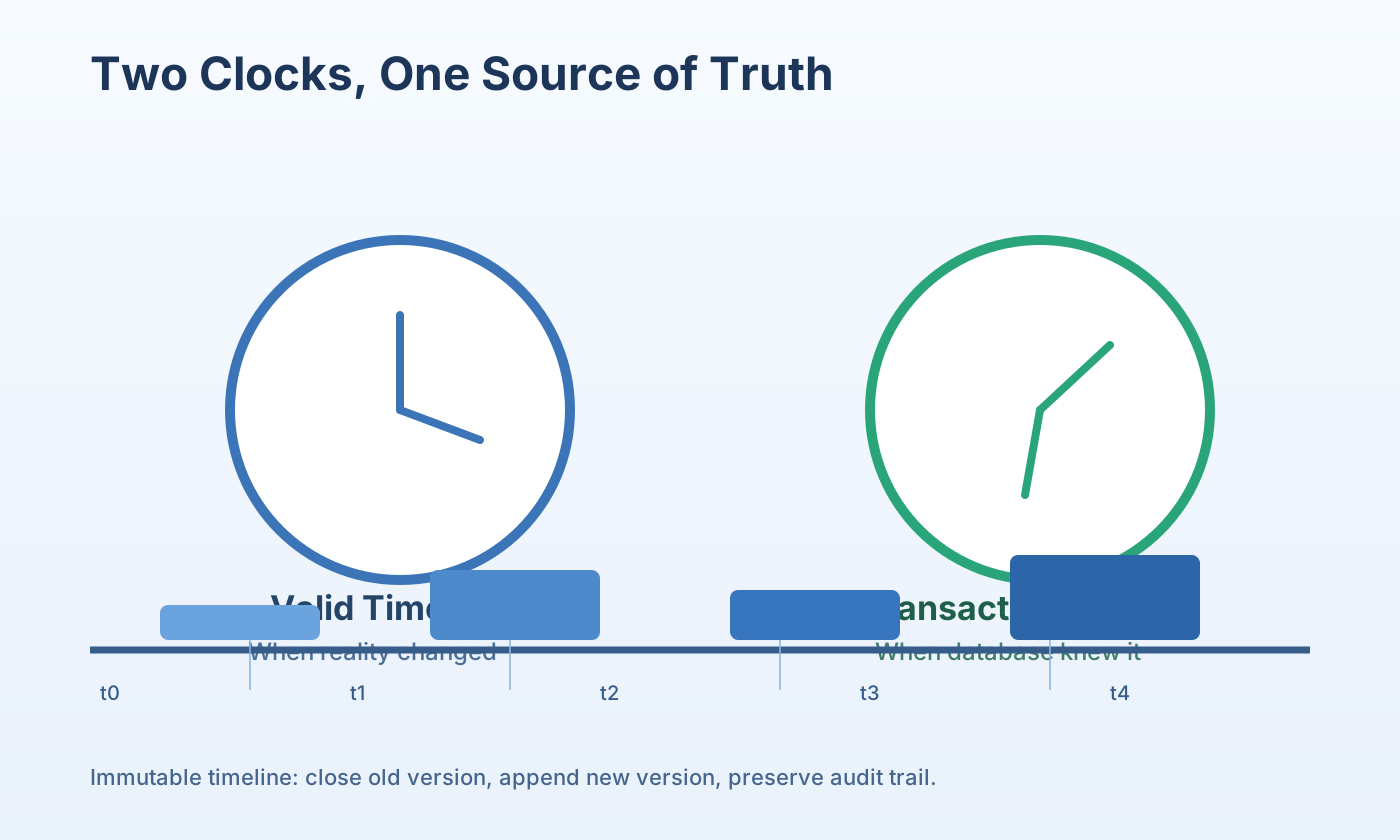 The two-time-axis model in practice: Valid Time captures real-world truth changes, while Transaction Time captures when the system learns those changes.
The Scientific Research Driving the Foundation
The current breakthrough of the bi-temporal model is the culmination of a long evolutionary journey in academia, backed by leading research:
- Provenance Foundations: Built upon W3C PROV standards and PROV-ML research, laying the groundwork for tracking the complete lifecycle of data and Machine Learning models.
- LongMemEval (2024): A long-term memory evaluation framework published by researchers demonstrating that managing interaction history and temporal reasoning plays a decisive role in drastically improving AI memory and reasoning (yielding an 18.5% increase).
- Microsoft Research’s LazyGraphRAG (2024): Research proving that combining knowledge graphs with “deferred” summarization until query time preserves historical consistency, cuts latency by 90%, and saves massive computing costs.
- OG-RAG at EMNLP 2025: A study on Ontology-Grounded RAG by Kartik Sharma and colleagues, showing that applying strict temporal and semantic architectures improves fact-based reasoning by 27% and accelerates provenance tracing by 30%.
- Zep / Graphiti (2025): A scientific paper on building a “temporally-aware knowledge graph” for AI agents, separating the episodic layer from the semantic layer to manage continuous data evolution seamlessly.
2. Cost Comparison: Trading Storage for Compute Performance
Never deleting data will inevitably create system pressure. However, the cost equation of the bi-temporal model is an incredibly favorable trade-off:
- Storage Cost - Increases: Data bloats continuously over time because every update generates a new node/edge alongside mandatory temporal metadata (
valid_from,valid_to,tx_from,tx_to). - Compute Cost - Drops Massively: To compensate for the storage overhead, methods like LazyGraphRAG help slash query computing costs by hundreds of times compared to conventional systems, as they eliminate the need to continuously re-process and re-summarize old data chunks.
3. Contraindications: When NOT to Apply This Model?
Despite its overwhelming power, the bi-temporal model is a “heavy-duty weapon.” You should strictly avoid using it in the following scenarios:
- MVP / Prototyping Projects: Building a complex historical management system right from the start will severely hinder Developer Velocity and create unnecessary technical debt.
- Systems Requiring Ultra-Low Write Latency: Every write operation must pass through logic checks, timestamp the old record, and generate a new one, making data ingestion slower than a standard database.
- Transient Data: If the system only needs to know the “right now” state (e.g., real-time GPS locations, temporary e-commerce carts) and will never query the past.
- Inexperienced Teams: Confusing the “valid time” and “transaction time” axes will lead to severely corrupted historical data and catastrophic architectural flaws.
4. Vision: The Mandatory Standard for the Trustworthy AI Era
As AI increasingly dictates critical human decisions, “trust” has become the most expensive currency.
The bi-temporal data model will soon shed its “cutting-edge” label to become a mandatory standard for high-risk sectors like Finance, Healthcare, and Law. In these fields, an AI must not only provide the correct answer but also demonstrate Explainable AI (XAI) capabilities, tracing its exact reasoning flow through clear chronological milestones. The bi-temporal model is the key to unlocking this era - an era of AI systems that possess the complete, evolutionary history of human knowledge.
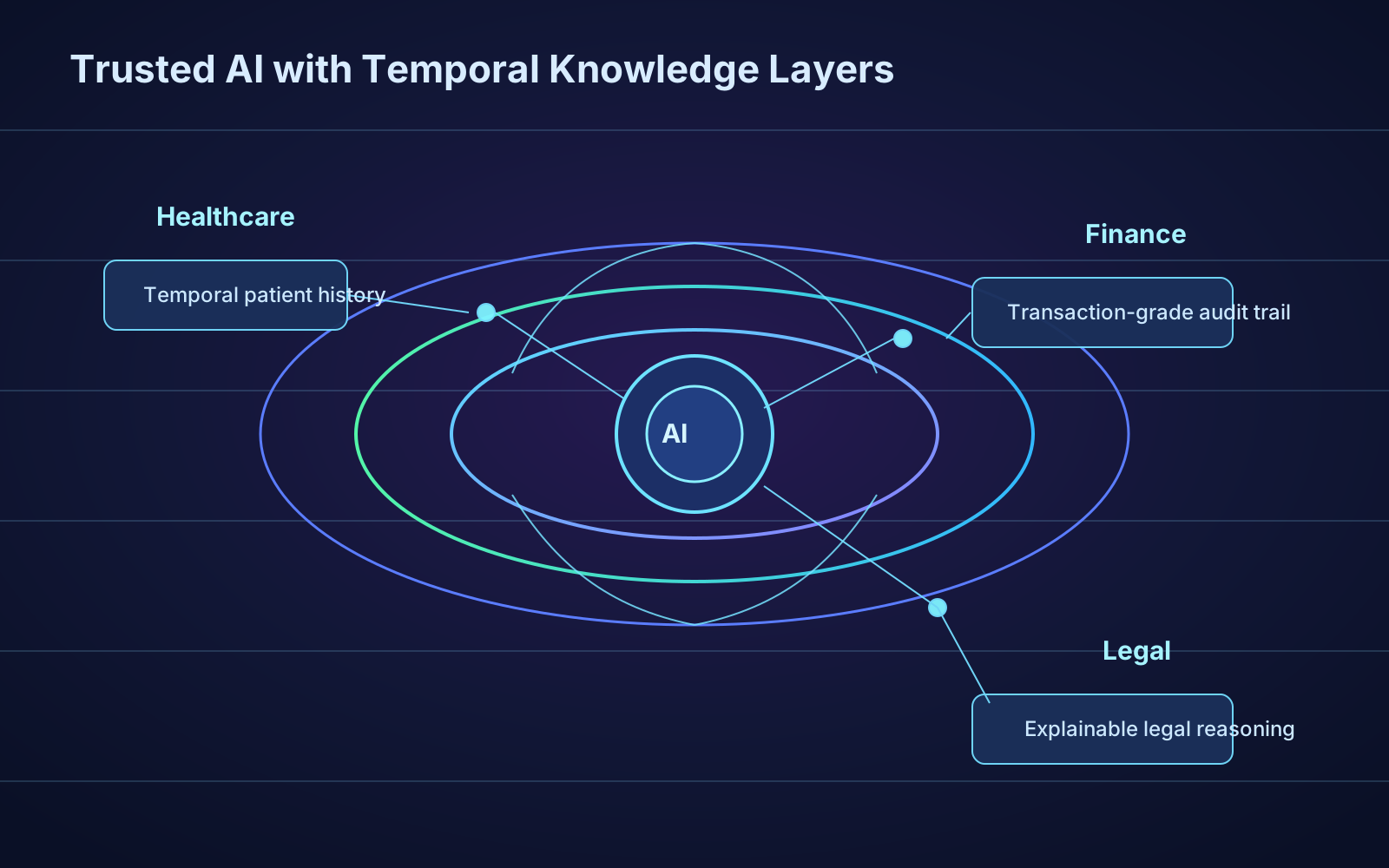 Concept art of a trustworthy AI stack that preserves and reconstructs temporal knowledge across Finance, Healthcare, and Legal workflows.